Choose Puja
Select Puja
Checkout Details / Sankalp Form
Puja and Prasad delivery
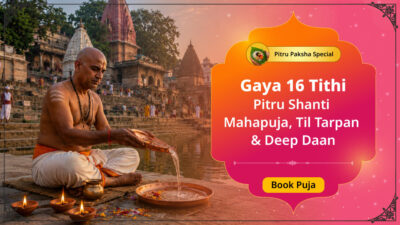
For Ancestral Peace, Family Harmony & Blessings of the Ancestors
Don't miss out - Puja bookings close soon!
2 Lakh+ Devotees
have offered Puja conducted by Via Veda
🙏 Why Are the 16 Tithis of Pitru Paksha Considered Special?
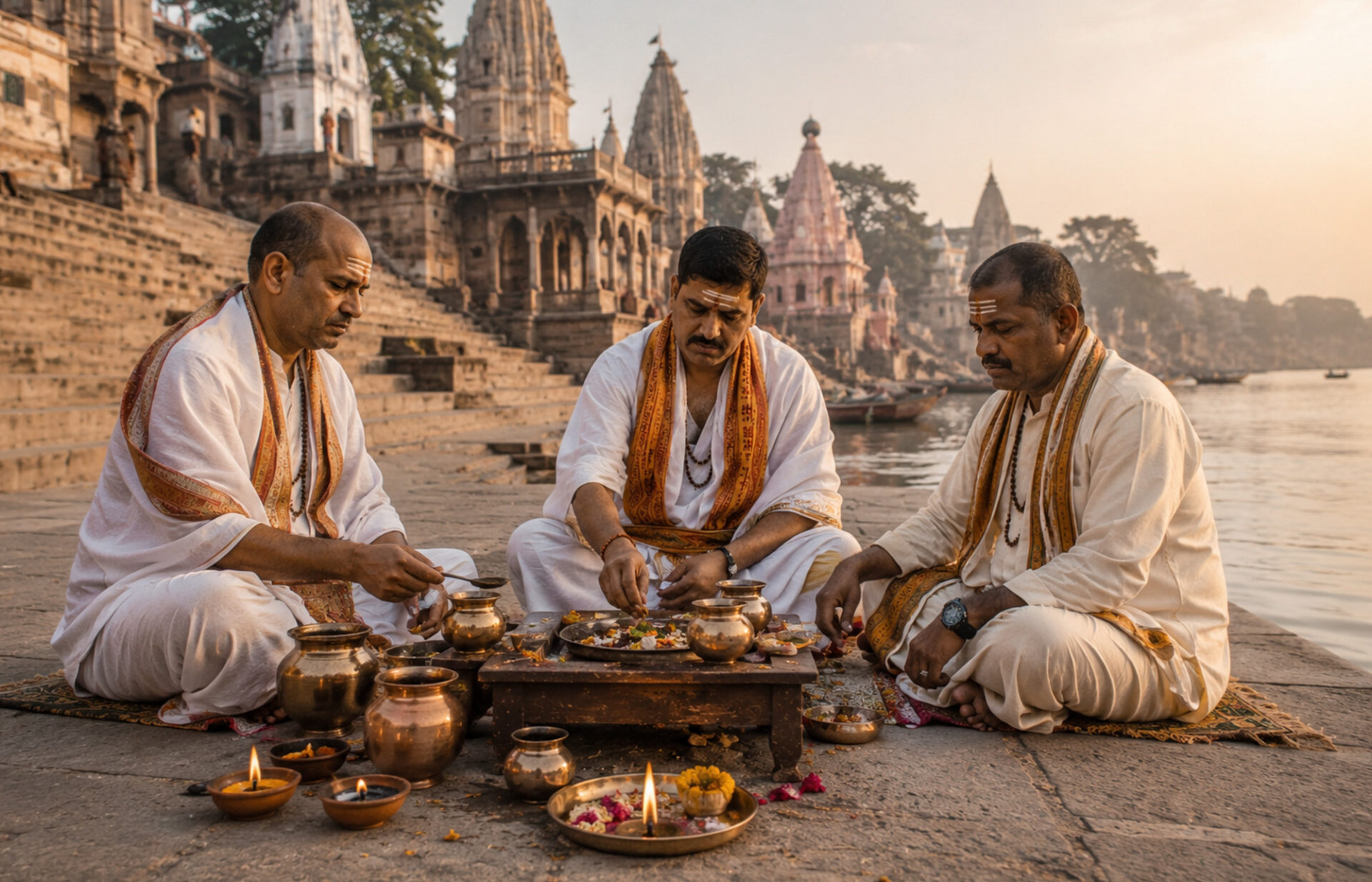
In Sanatan tradition, Pitru Paksha is considered a sacred period dedicated to remembering one’s ancestors and performing Shraddha, Tarpan, and Pind Daan for them. During this period, different Tithis are dedicated to ancestors who passed away on the corresponding lunar date. This is why traditionally, Pitru rituals are performed according to the Tithi of the ancestor’s passing rather than the date of the Gregorian calendar. In this special ritual, prayers for Pitru Shanti will be offered keeping all 16 Tithis of Pitru Paksha in consideration, allowing devotees to pay homage to both known and unknown departed ancestors of their lineage.
🌑 Why Is This 16-Tithi Ritual So Significant?
It is not always possible for every family to know the exact Tithi of all their departed ancestors.
As generations pass, such details may also be forgotten. Each Tithi of Pitru Paksha holds its own religious significance, while Sarva Pitru Amavasya, observed at the end of Pitru Paksha, is considered especially important for known and unknown ancestors, those whose death Tithi is not known, and those for whom Shraddha may not have been performed earlier.
With this sacred intention, this special ritual will be dedicated to all 16 Tithis of Pitru Paksha. Through the Mahapuja, Til Tarpan, and Deep Daan, prayers will be offered for the peace and spiritual contentment of the ancestors, along with their blessings upon the entire family lineage.
⚠️ What Is the Connection Between Pitru Rin and Pitru Shanti?
According to Sanatan tradition, every person is believed to carry three important spiritual debts—Deva Rin, Rishi Rin, and Pitru Rin. Pitru Rin represents our responsibility and gratitude towards our ancestors, from whom we have received our life, lineage, values, and traditions. Pitru Paksha is considered a sacred period to acknowledge this debt and express gratitude towards them.
Religious beliefs also associate Pitru Shanti with peace, harmony, and the well-being of the family lineage. Therefore, performing Tarpan, Puja, and Daan during Pitru Paksha is not merely a religious ritual, but also a meaningful way to remember one’s ancestors and express gratitude towards them.
🛕 Why Is Gaya Considered Special for Pitru Shanti?
Among the major sacred places associated with ancestral rituals in India, Gaya holds exceptional significance. The sacred Vishnupad Kshetra and the Phalgu River, associated with Lord Vishnu, have been important centres for Shraddha, Tarpan, and Pind Daan for generations.
The spiritual significance of Gaya is also connected with the sacred legend of Lord Vishnu and Gayasura. According to religious tradition, after Lord Vishnu granted a boon to Gayasura, this sacred land became renowned for performing ancestral rites. Gaya is also traditionally associated with Lord Rama performing ancestral rites for his father, King Dasharatha. Therefore, taking a Sankalp for one’s ancestors at Gaya during the 16 Tithis of Pitru Paksha gives this ritual special religious significance.
🪔🌊 What Is the Significance of Til Tarpan and Deep Daan?
Til Tarpan holds an important place among the sacred rituals performed during Pitru Paksha. In this ritual, ancestors are remembered with devotion while offering water, black sesame seeds, and Kusha grass, with prayers for their spiritual contentment.
The word “Tarpan” is associated with satisfaction or contentment. In religious tradition, black sesame seeds are associated with purity, while Kusha grass holds sacred importance in ancestral and Vedic rituals.
Deep Daan symbolizes light, remembrance, and devotion. A sacred lamp is offered in the name of the ancestors while praying for their peace and spiritual journey. In this ritual, Deep Daan will be performed as a complementary act of remembrance alongside the principal ancestral rites.
🕉️ What Will Be Performed in This Special Ritual?
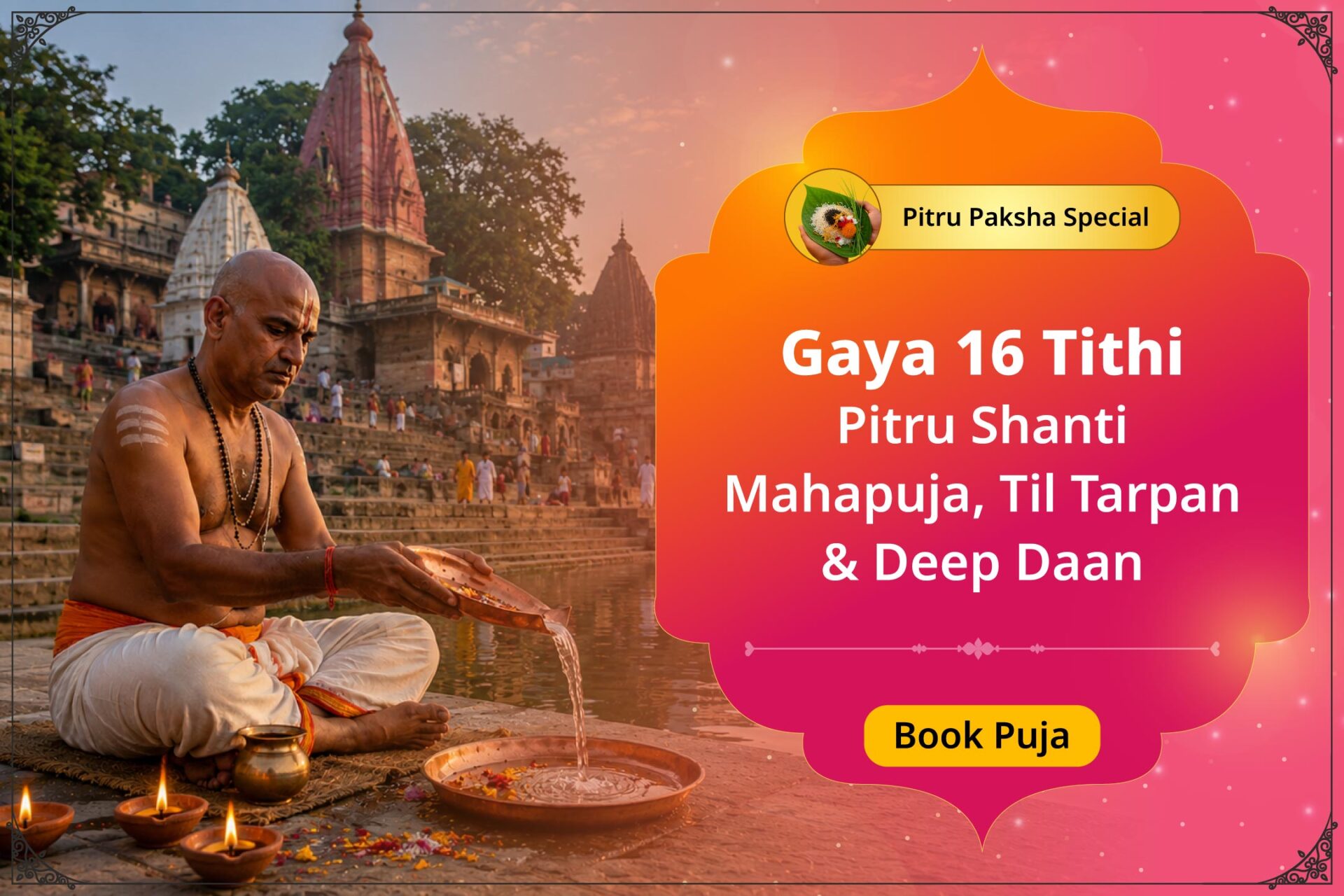
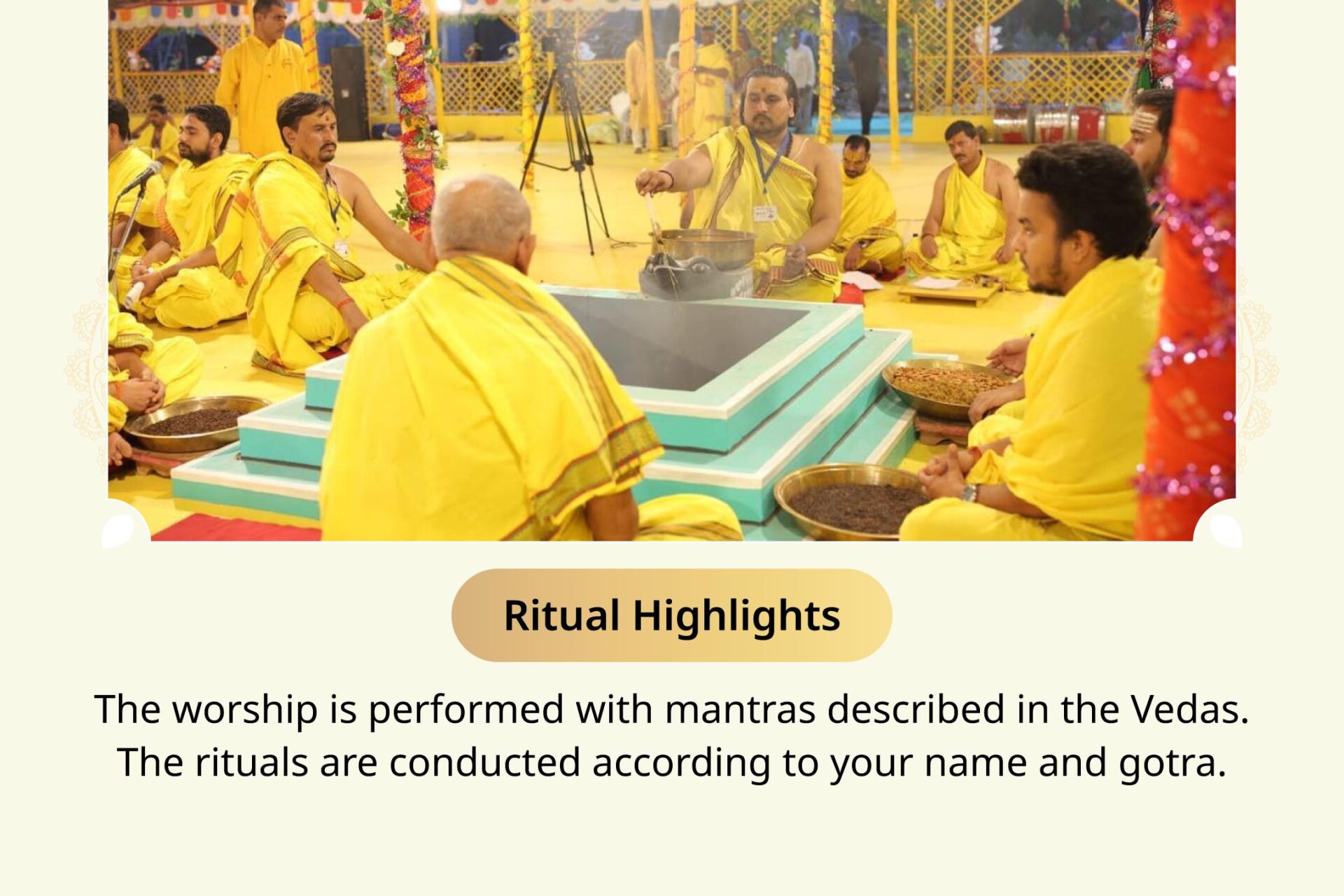
During Pitru Paksha, a Sankalp will be taken in your name and Gotra at the sacred pilgrimage site of Gaya, followed by the Pitru Shanti Mahapuja. The departed ancestors of the family lineage will be remembered with devotion, and prayers will be offered for their peace and spiritual contentment.
Along with the Mahapuja, Til Tarpan will be performed using black sesame seeds, water, and Kusha grass, followed by Deep Daan with prayers for the peace and Sadgati of the ancestors. Through this special Sankalp dedicated to the 16 Tithis of Pitru Paksha, prayers will be offered for the peace of known and unknown ancestors, the happiness and prosperity of the family, and the blessings of one’s forefathers.
🛕 Why is Gaya considered special for Pitru Shanti?
Among the major Pitru Teerthas of India, Gaya holds exceptional significance. The sacred Vishnupad Kshetra and Falgu River, associated with Lord Vishnu, have remained prominent centres for Shraddha, Tarpan, and Pind Daan for generations.
The spiritual significance of Gaya is also connected with the sacred legend of Lord Vishnu and Gayasura. According to religious tradition, after Lord Vishnu granted a boon to Gayasura, this land became renowned for ancestral rites. Gaya is also associated with the tradition of Lord Shri Ram performing ancestral rites for his father, Maharaja Dasharatha.
Therefore, taking a Sankalp for one’s ancestors at Gaya during the 16 Tithis of Pitru Paksha gives this ritual profound religious significance.
🌊 What is the significance of Til Tarpan?
Til Tarpan holds a special place among the major rituals of Pitru Paksha. Water, black sesame seeds, and Kusha grass are offered while remembering one’s ancestors and praying for their satisfaction.
The word ‘Tarpan’ is associated with Tripti, or satisfaction. In religious tradition, black sesame is associated with purity, while Kusha has an important place in sacred rituals. Because of Gaya’s ancient Pitru traditions connected with Vishnupad and the Falgu River, Til-Jal Tarpan performed here is considered especially significant.
🪔 Why is Deep Daan performed?
A lamp represents light, remembrance, and devotion. By offering a Deep in the name of one’s ancestors, devotees pray for their peace and spiritual upliftment.
In this ritual, Deep Daan will be performed as a supplementary act of remembrance alongside the primary ancestral rites. It is intended to complement the Pitru Puja and Tarpan rather than replace the traditional Tithi-based ancestral rites.
🕉️ What will happen during this special ritual?
During Pitru Paksha, a Sankalp will be taken in your name and Gotra at Gaya Teerth, followed by the Pitru Shanti Mahapuja. Departed ancestors of the family lineage will be remembered with devotion, and prayers will be offered for their peace and satisfaction.
Along with this, Til Tarpan will be performed using black sesame seeds, water, and Kusha, followed by Deep Daan with prayers for the peace and spiritual upliftment of the ancestors. Through this special Sankalp dedicated to the 16 Tithis, prayers will be offered for known and unknown ancestors, family well-being, prosperity, and ancestral blessings.
Located in Bihar, Gaya is considered one of India’s oldest and most revered sacred destinations for ancestral rites. The Vishnupad Kshetra, associated with Lord Vishnu, and the sacred Falgu River have long been connected with the traditions of Pind Daan, Shraddha, and Tarpan.
The religious significance of Gaya is deeply connected with the legend of Lord Vishnu and Gayasura. Ramayana traditions also associate Gaya with Lord Shri Ram and Mata Sita performing ancestral rites for Maharaja Dasharatha, further strengthening its sacred connection with Pitru Karma.
For generations, devotees have therefore travelled to Gaya to perform Pind Daan, Shraddha, and Tarpan for their ancestors. Performing the 16-Tithi Pitru Shanti Mahapuja, Til Tarpan, and Deep Daan at this sacred Teerth during Pitru Paksha carries special spiritual significance.
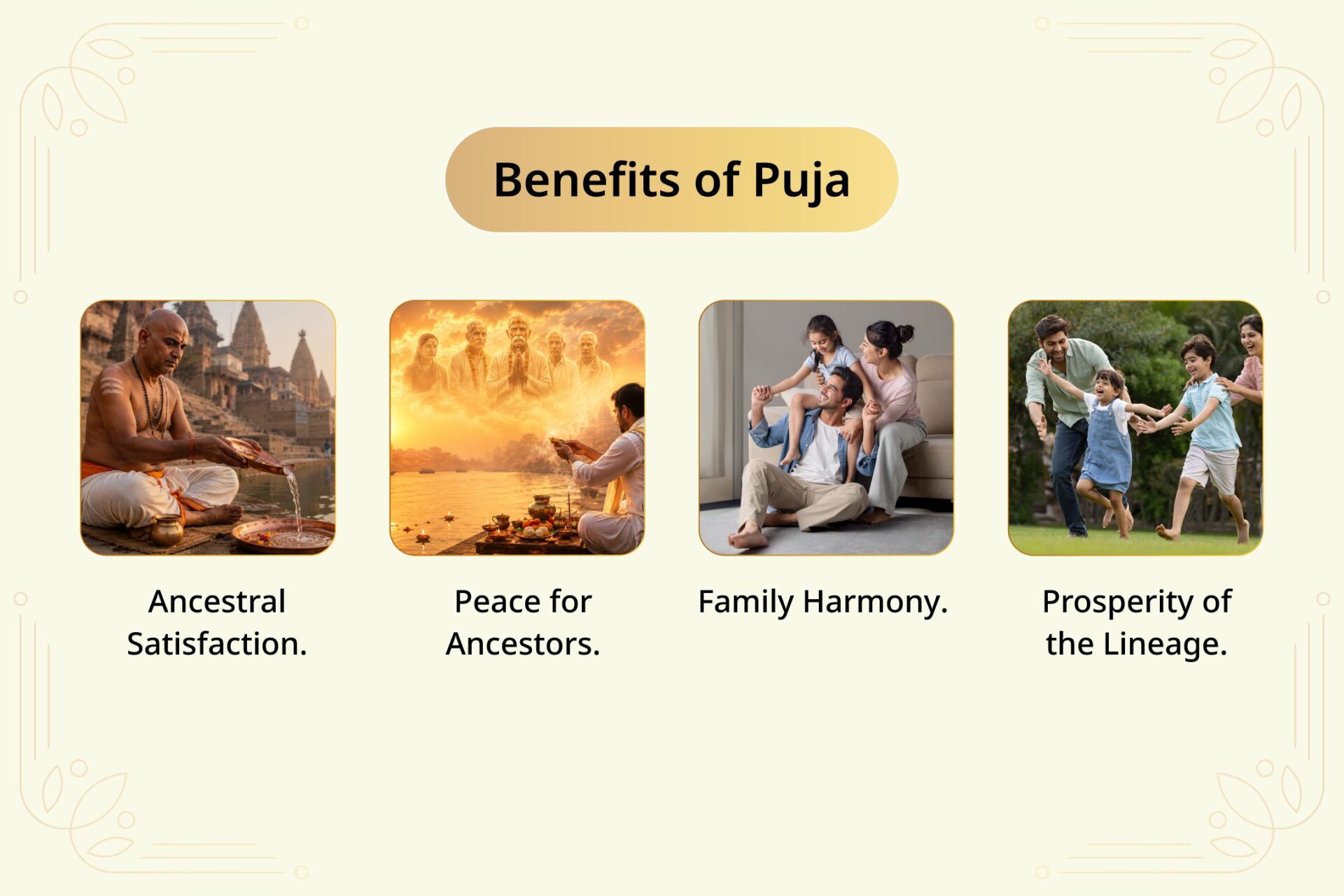
Through this special ancestral ritual dedicated to the 16 Tithis, prayers will be offered for the peace and spiritual upliftment of departed ancestors.
With the blessings of the ancestors, special prayers will be offered for relief from long-standing family tensions, disagreements, and obstacles in life.
Through this ritual, prayers will be offered for family harmony, financial stability, mutual understanding, and the progress and well-being of future generations.
Through Mahapuja, Til Tarpan, and Deep Daan dedicated to all 16 Tithis of Pitru Paksha, prayers will be offered for the grace, protection, and blessings of the ancestors.
Through Til Tarpan and Pitru Puja, prayers will be offered for the satisfaction, peace, and spiritual well-being of known and unknown ancestors of the family lineage.





1 Devotee
2 Devotee

6 Devotee

Exclusive Puja
100% Money Back Guarantee
No Hidden Cost
Official Temple Partner
Customer Support
During the Sankalp, our Pandit Ji will recite 2 devotees name and family gotra.
You may opt for additional offerings like Vastra Daan, Gau Seva, or Chadawa Sewa in your name.
A video of your puja and offerings will be shared via your WhatsApp number.
Within 8–10 days, you’ll receive a Divine Aashirwad Box with Prashad, Sacred Thread, and other holy items delivered free by Via Veda.
Vishnu temple rituals looked authentic and beautifully performed throughout today.
Lakshmi puja brought positive feelings and happiness to our family.
Shani puja was good only the video arrived a little late.
Hanuman Ji seva was completed exactly as promised with great care.
The Mahadev puja video filled our hearts with peace and devotion.
लक्ष्मी पूजा का अनुभव परिवार के लिए बहुत शुभ रहा।
माँ काली की पूजा देखकर मन सचमुच भावुक हो गया।
शनि पूजा अच्छी रही, वीडियो थोड़ा देर से मिला लेकिन संतोष हुआ।
हनुमान जी की सेवा पूरी श्रद्धा और विश्वास के साथ हुई।
महादेव की पूजा देखकर मन को बहुत शांति और संतोष मिला।
ViaVeda is a digital platform that provides you the opportunity to benefit from religious services. Through this, you can contribute to Gau Seva, Annadaan and temple reconstruction. Moreover, you can consult experienced astrologers and get services like horoscope, numerology and Vastu.
Maintain mental and physical purity on the day of Puja, observe celibacy, and remember your chosen deity. You will be informed about the Puja process in advance, and a recorded video of the Puja will be sent to you afterward.
If you want more information about Puja, you can contact ViaVeda customer support number +91 96676 33379. Our team is ready to assist you in every possible way.
ViaVeda is a trustworthy platform that provides you the opportunity to perform Puja from home. After your Puja booking, the ritual will be performed by qualified priests at an auspicious time. Afterward, prasad and a video of the Puja performed with your name and lineage will be sent to your registered WhatsApp number.
After booking the Puja, our team will contact you within 24 hours and take your name, lineage, and other details. You can also obtain other information about the Puja from the team.
There is not much difference between the process of online and offline worship. In both, the same priest performs the puja according to your name and Gotra. This means that in Napoleon (offline) Puja you are physically located in the temple, whereas in offline puja you get this facility sitting at home. Recorded video of the puja will be sent to you later.
Yes, a recorded video of the Puja performed by Via Veda will be sent to your provided WhatsApp number.